
Five Types of Workplace Drug Testing and When to Use Each
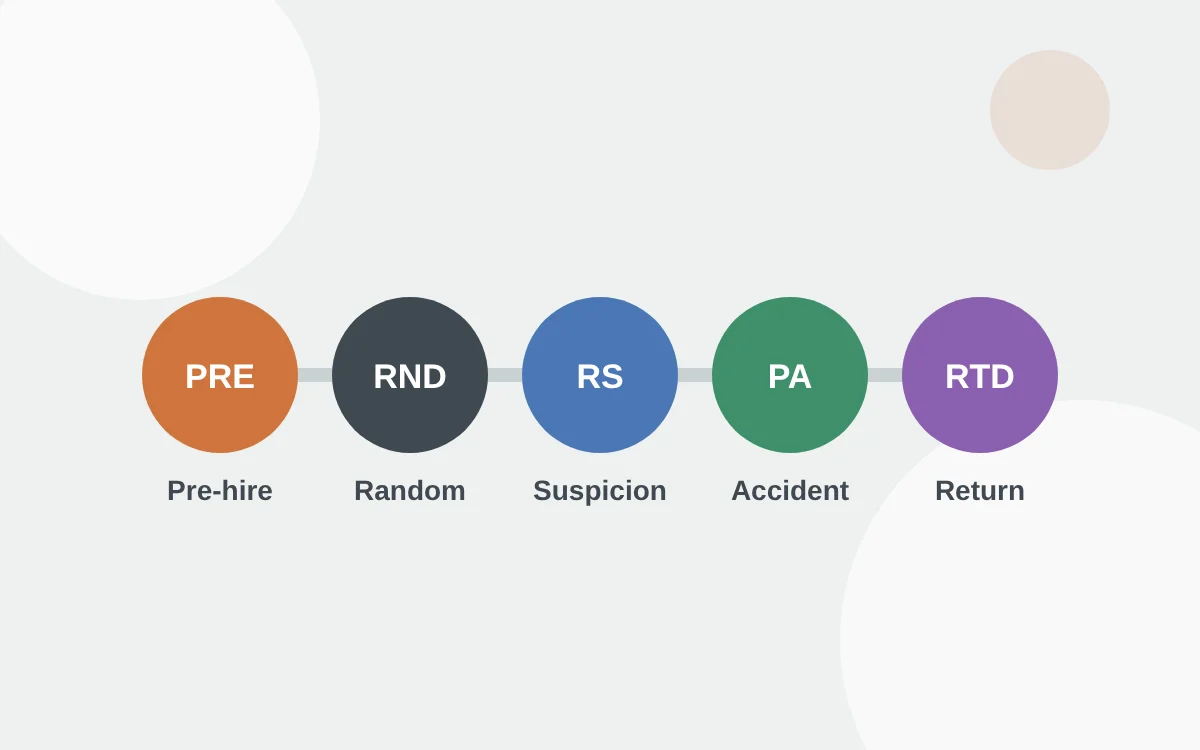
Most workplace drug testing programs use some combination of five testing reasons. Each has a different purpose and different rules.
Pre-employment
Testing applicants after a conditional job offer. It is the most common test and sets expectations from day one. Apply it to every candidate for the same position.
Random
Testing a set percentage of employees chosen by a neutral random process. Random testing is a strong deterrent, but selection must be truly random and documented. Some states restrict random testing to safety-sensitive roles.
Reasonable suspicion
Testing when a trained supervisor observes specific, documented signs of possible impairment, such as slurred speech, the smell of alcohol or unsafe behavior. Documentation is everything: what was seen, when and by whom.
Post-accident
Testing after an accident or incident. Time matters, because drugs and alcohol leave the body. Write clear criteria for which incidents lead to a test.
Return to duty and follow-up
Testing an employee before they return after a policy violation, and periodically afterward if your policy allows.
Put it in writing
Whatever reasons you use, your written policy should define each one and apply it consistently.
The Employers Guidebook covers each type of testing in detail, with real-world case scenarios.