
Construction Drug Testing: In-House vs. Sending Workers to a Clinic
Every hour a new hire spends driving to a clinic is an hour they are not on the jobsite. For construction companies that hire in waves and staff projects on short notice, how you run drug testing has a direct effect on schedules.
The clinic model
Sending applicants and employees to an outside clinic is simple to start. The clinic collects the specimen, a laboratory screens it and results come back in a day or more. The trade-offs show up in the field: travel time, waiting rooms, results that arrive after the start date, and post-incident tests that happen hours after the event.
The in-house model
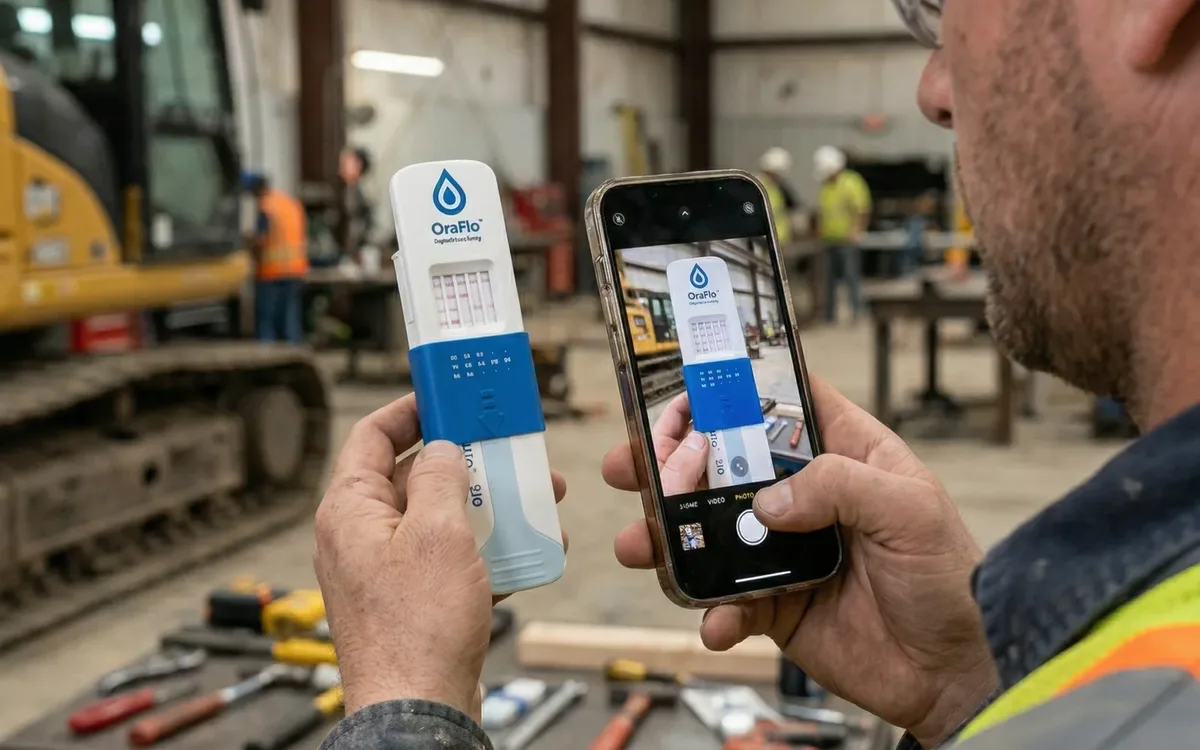
With in-house testing, trained staff in your office or on the jobsite collect the specimen and run a rapid screen. Negative results are known in minutes, so a crew member can start the same day. Only non-negative screens go to a laboratory for confirmation and medical review.
In-house testing works well when you:
- Hire often or across many sites
- Need post-incident tests fast, while the result still means something
- Want one documented process instead of a different clinic for every project
What in-house does not change
The rules stay the same. DOT-regulated drivers still follow federal testing rules and laboratory testing. Your written policy, consent, chain of custody and confidentiality all still apply. In-house testing moves the collection closer to the work. It does not lower the standard.
Making the result objective
The most common objection to in-house testing is reading the result by eye. A faint line read differently by two supervisors is a problem in a dispute. A digital reader such as Labb Station reads the test the same way every time and documents the result with the donor and collection details.
Where to start
The Construction Screening Guidebook walks through the decision, a step-by-step plan to move testing in-house, and a 25-question practice exam to check your team is ready.