
How Lateral Flow Rapid Drug Tests Work, and What Affects Accuracy
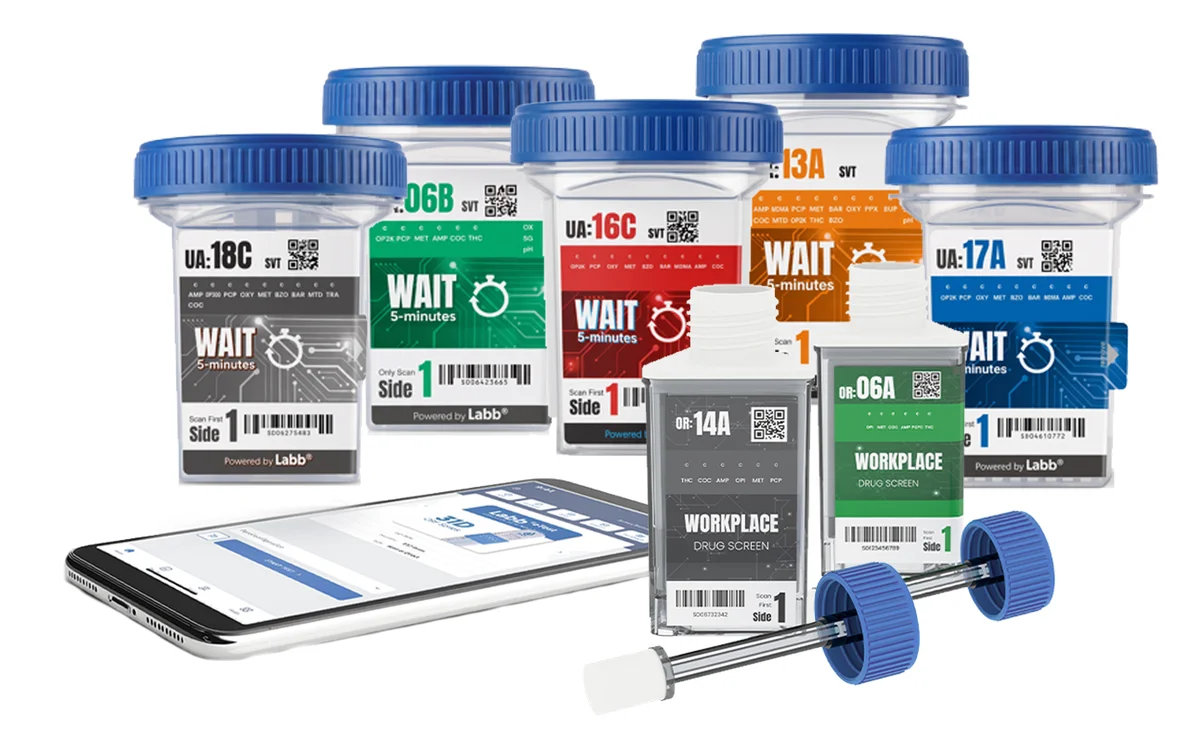
Most rapid drug tests use lateral flow immunoassay, the same basic technology as many other rapid diagnostic tests. Understanding how it works helps collectors read results correctly and explain them.
The basics
The specimen moves along a strip by capillary action. Each drug zone on the strip contains antibodies and a drug-conjugate. If the drug is absent, a line forms in the test zone. If the drug is present above the cutoff, it blocks the line from forming.
That is why, on most drug tests, a line means negative and no line means non-negative. A control line must also appear for the test to be valid.
Cutoffs
Each drug has a cutoff concentration. Below it, the test reads negative even if some drug is present. Cutoffs are listed on the package insert.
What affects accuracy
- Reading too early or too late
- Specimen temperature and volume
- Storage conditions and expiration dates
- Cross-reactivity with other substances
- Faint lines read by eye
Make the read objective
A digital reader such as Labb Station reads the strip the same way every time and records the result, removing the guesswork around faint lines.
Remember: it is a screen
A non-negative rapid test is a preliminary result. It goes to a laboratory for confirmation and medical review.
The Clinic Owners Guidebook covers rapid test technology, kit types, package inserts and quality control in depth.